
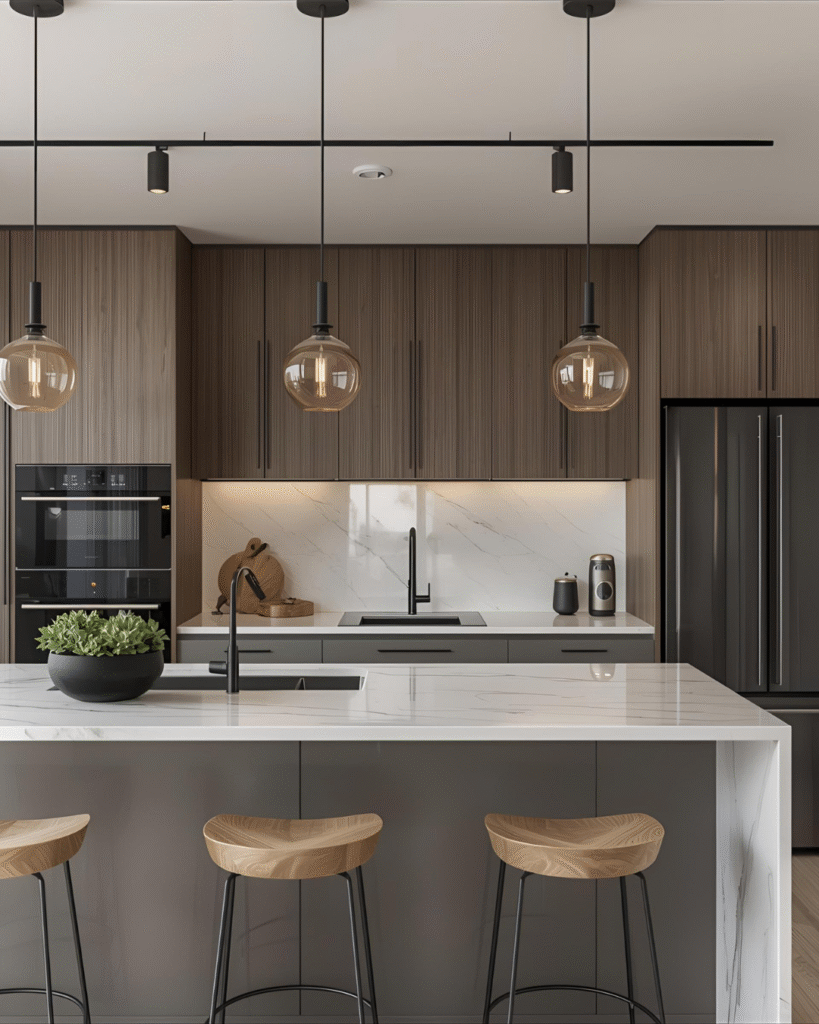
How Much Does a New Kitchen Cost in Southampton? | Plumbing & Installation Guide
When homeowners across Southampton plan a new kitchen, the conversation usually starts with units, worktops, and appliances — the visible elements that determine how the room looks. What rarely gets enough attention is the plumbing that sits behind and beneath everything else. The pipework supplying hot and cold water to the sink and dishwasher. The waste connections draining them properly. The gas supply feeding the hob or range cooker. The heating adjustments needed when radiators move or underfloor heating replaces them. The boiler modifications required when a combination boiler suddenly needs to supply a hot tap on the opposite side of the kitchen from where it used to be.
These hidden elements determine whether your new kitchen works reliably for a decade or develops problems within months. And across Southampton, the plumbing stage is where kitchen projects most commonly go wrong — usually because the plumbing was treated as an afterthought rather than planned properly from the start.
This guide explains what kitchen plumbing costs, what affects the price, and how to ensure the infrastructure behind your new kitchen is as good as the surfaces in front of it.
What Does Kitchen Plumbing Cost?
The plumbing element of a kitchen installation in Southampton typically falls into one of three categories depending on how much the layout changes.
Like-for-like replacement plumbing — where the new sink, dishwasher, and washing machine go in exactly the same positions as the old ones — typically costs between £400 and £800. The existing supply and waste connections are reused with new fittings, flexible connectors, and isolation valves. This is the simplest and cheapest scenario because the pipework routes already exist and the waste connections already have adequate fall to the drain.
Moderate layout changes — repositioning the sink to face the window, moving the dishwasher to a different run of units, relocating the washing machine, or adding a boiling water tap — typically cost between £800 and £1,800 for the plumbing work. Each repositioned appliance needs its supply pipes extended or rerouted and its waste connection modified. The further the appliance moves from the original position, the more pipework is involved and the more critical the waste fall becomes.
Major layout reconfiguration — moving the sink to the opposite wall, installing a kitchen island with a sink or dishwasher, repositioning multiple appliances, or combining the kitchen plumbing changes with a boiler relocation — typically costs between £1,800 and £3,500 for the plumbing element. Kitchen islands with sinks are particularly complex because the waste pipe needs routing through or under the floor to reach the soil pipe or waste stack, and the fall must be adequate over what is often a longer horizontal run than a wall-mounted sink requires.
The Full Kitchen Cost Picture
Plumbing is one element of the total kitchen cost. Understanding where it sits within the full picture helps you budget effectively.
A straightforward kitchen replacement in the existing layout — new units, worktops, tiling, flooring, plumbing, electrics, and decoration — typically costs between £6,000 and £13,000 across Southampton. The plumbing element represents roughly five to ten percent of this total.
A mid-range renovation with layout changes, new plumbing runs, updated electrics, plastering, and quality finishing typically costs between £13,000 and £26,000. The plumbing element rises to eight to twelve percent because repositioned appliances need new pipework.
A major project with structural wall removal for open-plan living, premium units, stone worktops, island installation, and comprehensive finishing typically costs between £26,000 and £48,000. The plumbing can represent ten to fifteen percent when island waste routing, boiler modifications, and underfloor heating are included.
What Affects Kitchen Plumbing Costs?
Distance from the existing drainage is the biggest factor. A sink on the same wall as the existing waste connection needs minimal new pipework. A sink relocated to the opposite wall or installed in an island needs a waste run across or under the floor with consistent fall throughout its length. If the fall is insufficient, the waste drains slowly, food particles accumulate, and blockages become a recurring problem.
Across Southampton’s housing, the distance between the kitchen and the external drain varies significantly. Victorian and Edwardian terraces through Portswood, Freemantle, and the older streets often have the drain directly outside the kitchen wall, making repositioning relatively straightforward. Post-war housing across Lordshill, Millbrook, and Thornhill sometimes has longer waste runs to reach the drainage, and newer estates may connect to different drainage arrangements entirely.
The number of appliances requiring plumbing affects the scope. A basic kitchen has one sink, one dishwasher, and potentially a washing machine — three plumbed connections. Adding a boiling water tap, a second sink in an island, or an integrated fridge with a water dispenser and ice maker each adds another connection requiring supply pipework and potentially waste routing.
Gas supply modifications add cost when the hob position changes. If you are moving from an electric hob to gas, a new gas supply pipe needs running from the meter to the hob position. If the gas hob is moving to a different location — particularly to an island — the gas pipe needs routing through or under the floor. Gas work must be carried out by a Gas Safe registered engineer and certified on completion. A new gas supply run typically adds £250 to £600 depending on the distance and routing complexity.
Boiler and heating considerations arise when the kitchen renovation affects the heating system. Removing a radiator to accommodate new units and replacing it with underfloor heating changes the system configuration. Moving a wall-mounted boiler during a structural renovation requires disconnection, repositioning, and reconnection with modified pipework. If the boiler is old and the kitchen renovation provides access to the pipework, combining a boiler replacement with the kitchen project makes practical sense — the disruption happens once rather than twice.
Water pressure and flow rate matter more in a kitchen than most homeowners realise. A combination boiler delivering hot water to a new sink position further from the boiler may produce lower flow rates than the old position. A boiling water tap requires adequate mains pressure to function properly. A fridge with a water dispenser needs a supply connection with sufficient pressure. Your plumber should assess the existing pressure and confirm it supports the planned appliance layout before installation begins.
Common Kitchen Plumbing Mistakes
Insufficient waste fall is the most common problem we encounter across Southampton. Every horizontal waste pipe needs a minimum fall of roughly ten millimetres per metre to drain properly. When a kitchen fitter repositions the sink without checking the fall to the drain, the result is slow drainage and recurring blockages. This is particularly problematic on island installations where the waste run is longer and the fall needs maintaining across the full distance.
Undersized pipework causes pressure problems. If the existing fifteen millimetre supply pipes are adequate for a sink on the same wall but the new layout adds a dishwasher, washing machine, and boiling water tap on extended runs, the pressure at each outlet drops. Upgrading to twenty-two millimetre supply pipes on the main run with fifteen millimetre branches to each appliance maintains adequate pressure throughout.
No isolation valves on individual appliances means the entire kitchen water supply needs shutting off to service or replace a single appliance. Installing isolation valves on every supply connection — sink hot and cold, dishwasher, washing machine, fridge, boiling water tap — costs very little during installation but saves significant inconvenience and potential water damage if an appliance develops a fault or needs replacing.
Inadequate access to waste connections causes problems when blockages occur. Waste pipes need accessible rodding points or removable connections at key junctions. Burying waste runs in concrete or boxing them in without access panels guarantees an expensive and disruptive repair when the inevitable blockage occurs.
Kitchen Islands — The Plumbing Challenge
Kitchen islands with sinks or dishwashers are increasingly popular across Southampton, but they present the most complex plumbing challenge in any kitchen project. The waste pipe needs routing from the island across or under the floor to the soil pipe or external drain. The supply pipes follow the same route.
The critical question is whether the floor construction allows pipes to run beneath it. Suspended timber floors — common in older Southampton properties — provide a void beneath the boards where pipes route easily. Solid concrete floors — common in post-war and modern properties — require channels cut into the concrete or pipes routed through the slab, which adds significant cost and disruption.
If your heart is set on an island with a sink, confirm the waste routing and fall are achievable before committing to the kitchen design. A plumber assessing the drainage position, floor construction, and available fall before the kitchen is ordered prevents the discovery mid-installation that the waste cannot drain properly — a problem that is expensive to solve and impossible to ignore.
When to Involve Your Plumber
The best time to involve a plumber in your Southampton kitchen project is before the kitchen is designed, not after. A plumber who assesses the existing drainage position, supply pipe routes, boiler location, and floor construction before the kitchen designer draws the layout can flag problems that are cheap to solve at the design stage and expensive to fix during installation.
If the plumber says the waste fall to a proposed island sink is marginal, the designer moves the island six inches and the problem disappears. If that conversation happens after the units are ordered and the worktop is cut, the options narrow dramatically and the costs escalate.
Getting the Best Value
Get a plumbing quote that specifies every connection — supply pipes, waste connections, isolation valves, gas modifications if applicable, and any heating changes. Ensure the quote covers testing and certification where required. Ask whether the plumber has assessed the waste fall for any repositioned appliances and confirmed it is adequate.
Coordinate the plumbing first fix with the kitchen programme. The plumber needs access to the walls and floor before plastering closes them up and before the kitchen units go in. First fix plumbing — running supply and waste pipes to the correct positions — happens early in the programme. Second fix — connecting appliances and fitting the sink — happens after the units and worktop are installed.
If you are planning a new kitchen at your Southampton home and want the plumbing done properly from the start, get in touch. We will assess your existing setup, discuss the planned layout, confirm the drainage works, and provide a clear quote for the complete plumbing element of your kitchen project.